

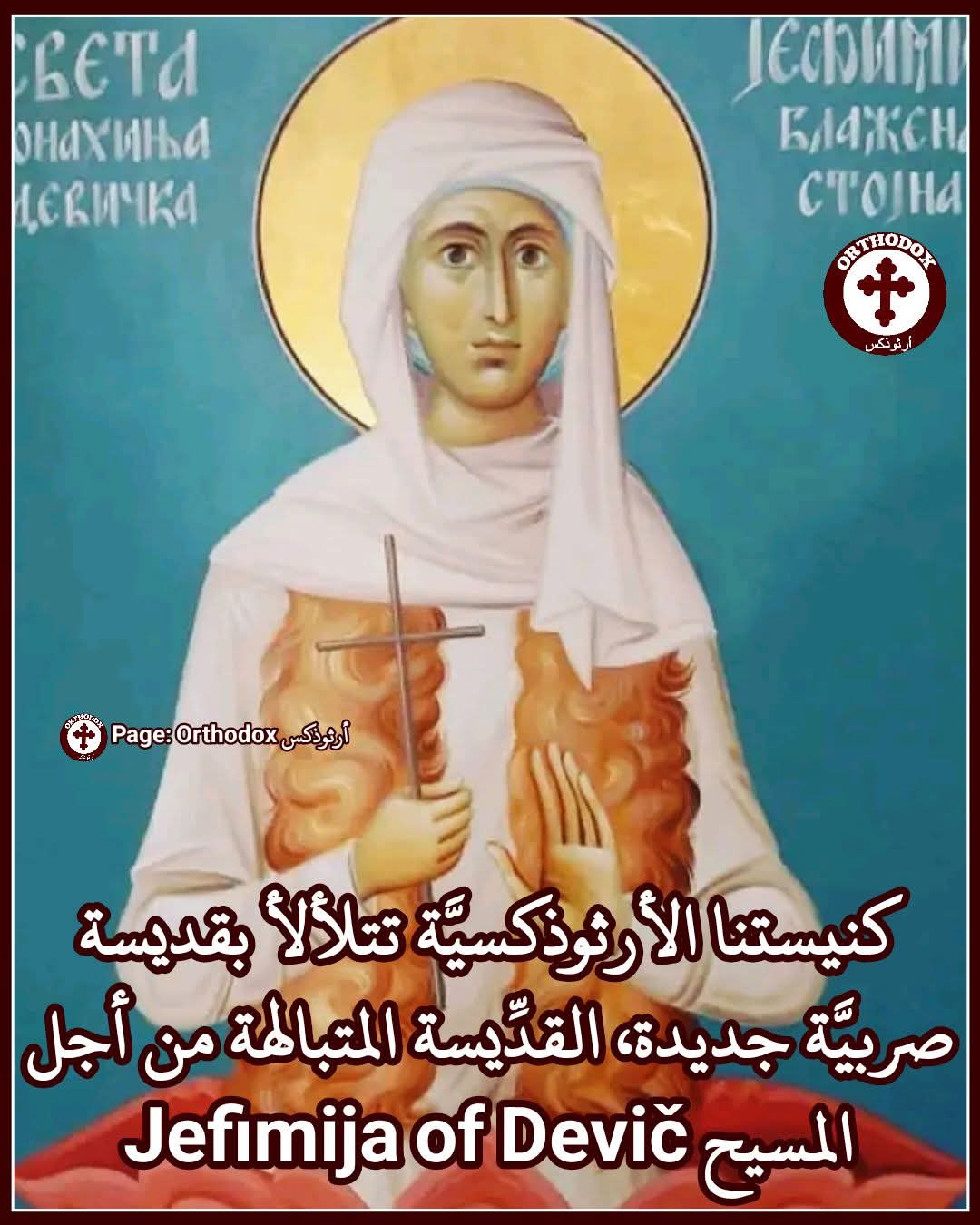
قديسة جديدة: مجمع الأساقفة الصربي يُعلن قداسة قديسة من القرن التاسع عشر كانت تُعرف بـ”المتبالهة من أجل المسيح” كتب سيرتها أوَّل مرَّة القدِّيس نيكولاي فيليميروفيتش : القدِّيسة Jefimija of Davic
بلغراد، ٢٢ مايو ٢٠٢٦
بقرار من مجمع الأساقفة الصرب، الذي انعقد في بلغراد في الفترة من ١٣ إلى ١٩ مايو، أُضيفت قديسة جديدة إلى التقويم الليتورجي للكنيسة الأرثوذكسية الصربية.
وجاء في البيان الصادر عن المجمع:
خلال دورة هذا العام، أضاف آباء المجمع إلى قائمة القديسين الراهبة الراحلة يفيميا دي ديفيتش، المعروفة شعبيًا باسم الطوباوية ستوينا (زاريتش)، التي رقدت عام ١٨٩٥، مُعتبرين حياتها مثالًا للفضيلة والجهاد الروحي. وقد أعدّ سيرتها الأولى القديس نيكولاي (فيليميروفيتش). حددت الجمعية يومي ٢٨ و١٥ فبراير من كل عام موعدًا لإحياء ذكراها الليتورجية.
وُلدت القديسة يفيميا عام ١٨١٥ باسم ستوينا زاريتش في قرية دوني لوبيزي بالقرب من سينيتسا، لعائلة كهنوتية مرموقة. عُرفت في شبابها بتواضعها وطاعتها، حيث كانت تعمل في أعمال القرية اليومية وترعى الأغنام.
لكن في سن العشرين، شعرت بنداء روحي، فذهبت إلى دير ديفيتش، الكائن في غابات درينيتسا البكر، حيث نذرت نذور الرهبنة وحصلت على اسم يفيميا. في هذا المزار العريق، المبني حول ضريح القديسة يوانيسيا من ديفيتش، بدأت الراهبة يفيميا مسيرة زهد وتقشف شديدة. عاشت على الخبز والماء، ونامت نومًا متقطعًا غير مريح، وقضت ساعاتٍ في صلواتٍ طويلةٍ دامعةٍ على ركبتيها، بينما كانت تعتني في الوقت نفسه بالدير نفسه وضريح القديسة جوانيكا.
ما ميّز الطوباوية ستوينا هو شكلٌ خاصٌ من الزهد المسيحي – الزهد المقدس. مع أنها كانت جاهلة بأمور الدنيا، إلا أن الناس لمسوا في سلوكها حكمةً روحيةً عميقة. كانت تسافر إلى المناطق المجاورة لجمع التبرعات للدير، وتغتنم الفرصة لتعليم الناس الدين. كانت صريحةً وحازمة، لكنها كانت مليئةً بالحب. دعت الناس جهرًا إلى التوبة، ولذلك لُقّبت بـ”التوبة”. كانت تُبارك، ولكنها كانت أيضًا تُهدّد وتُوبّخ المذنبين جهرًا، ثم تغفر لهم بعد ذلك. بفضل حياتها الصالحة ومواهبها الروحية، كانت تحظى باحترامٍ كبيرٍ من المسيحيين والمسلمين المحليين على حدٍ سواء، الذين رأوا فيها خادمةً حقيقيةً لله.
بحسب التقاليد، كانت تعرف وقت وفاتها، وقد رقدت القديسة ستوينا في الخامس عشر من فبراير عام ١٨٩٥ في نوفي بازار. ودُفنت رفاتها أمام كنيسة القديسين بطرس وبولس في راس. وقد تعزز تبجيلها الشعبي بعد أن رأى المؤمنون، وفقًا للشهادات، نورًا متوهجًا فوق قبرها لسنوات، وهو ما يُعد في التقاليد الأرثوذكسية علامة شائعة على القداسة.
New saint: 19th-century female fool for Christ canonized by Serbian Assembly of Bishops
Belgrade, May 22, 2026
By decision of the Serbian Assembly of Bishops, which met in Belgrade from May 13 to 19, a new saint has been added to the liturgical calendar of the Serbian Orthodox Church.
The communiqué on the Assembly’s work states:
During this year’s session, the fathers of the Assembly added to the ranks of the saints the late nun Jefimija of Devič, popularly known as Blessed Stojna (Zarić), who reposed in 1895, recognizing in her life an example of virtue and ascetic struggle. Her first hagiography was prepared by the Holy Hierarch Nikolaj (Velimirović). The Assembly designated February 28/15 each year as the date of her liturgical commemoration.
St. Jefimija was born in 1815 as Stojna Zarić in the village of Donje Lopiže near Sjenica, into a respected priestly family. In her youth she was known for her meekness and obedience, engaging in ordinary village work and tending sheep.
However, at the age of 20, she felt a spiritual calling and went to the Devič Monastery, nestled in the virgin forests of Drenica, where she took monastic vows and received the name Jefimija. In this ancient shrine, built around the tomb of St. Joanicia of Devič, the nun Jefimija began an exceptionally strict ascetic struggle. She lived on bread and water, slept briefly and uncomfortably, and spent hours in long, tearful prayers on her knees, while simultaneously caring for the monastery itself and the tomb of St. Joanica.
What distinguished Blessed Stojna was a specific form of Christian asceticism—holy foolishness. Although she was unlearned in worldly matters, people recognized in her behavior a deep spiritual wisdom. Traveling to surrounding areas to collect aid for the monastery, she used the opportunity to teach the people the faith. She was direct and sharp, but full of love. She openly called people to repentance, for which she received the nickname “Repentance.” She blessed, but also openly threatened and rebuked those who sinned, only to forgive them afterward. Because of her righteous life and spiritual gifts, she was equally revered by local Christians and Muslims, who saw in her a true servant of God.
According to tradition, she foreknew the time of her death, and Blessed Stojna reposed on February 15, 1895, in Novi Pazar. Her relics were buried in front of the Church of the Holy Apostles Peter and Paul in Ras. Her popular veneration was further strengthened after the faithful, according to testimonies, saw a flaming light above her tomb for years, which in Orthodox tradition is a common sign of sanctity